
How to Get Referrals for Your Financial Advisory or Tax Practice
Why isn’t good work enough to bring in referrals?
Good work gives people a reason to recommend your financial advisory or tax practice. It does not automatically give them the words. Knowing how to get referrals starts with making your practice easy to describe, then making that description easy to confirm when someone checks your website, reads your profile, or contacts your office.
If clients receive careful attention while marketing waits, give describing your work its own place on your list. Clients, strategic partners, friends, and family are four distinct referral sources, each with different reasons to introduce you.
Use two practical tests: can someone explain whom you help in one sentence, and can the person referred quickly confirm that fit?
For a hypothetical practice serving individuals approaching retirement, use only wording that accurately describes its services:
- Advisory: “We help people approaching retirement plan how to draw income from their savings.”
- Tax: “We help people approaching retirement understand the tax effects of retirement-income decisions.”
In this guide
- What makes it easier for clients to refer you?
- How do you build referral relationships with other professionals?
- How can friends explain your work without feeling asked to sell?
- How can family mention your practice without making it awkward?
- What rules apply to testimonials and paid referrals?
- What referral work fits into a busy month?
- What else should you know before asking for introductions?
- What should people remember about your practice?
What makes it easier for clients to refer you?
Clients can describe what working with you feels like, but they may need help recognizing whom you serve. Give them a plain description and a useful page to share. Offer an introduction as an option, not an obligation, and let the other person decide whether to respond.
A client of your advisory or tax practice knows the service firsthand, but may associate you only with the help they received. Their trust in you and comfort putting their reputation behind a recommendation are considerations. Leave room for them to decline.
For tax practices, word of mouth has concrete support: in a 2024 survey of low-income taxpayers, nearly three-quarters of the 572 respondents who used a paid preparer learned about that preparer through word of mouth.
After a useful retirement conversation, a hypothetical invitation could be:
“If someone you know is approaching retirement and needs help with [accurate service], you’re welcome to share this page. They can contact us if it would be useful.”
Replace the bracketed phrase with a service you actually provide. Let the client forward your page and contact details, rather than asking for names or another person’s financial or tax information.
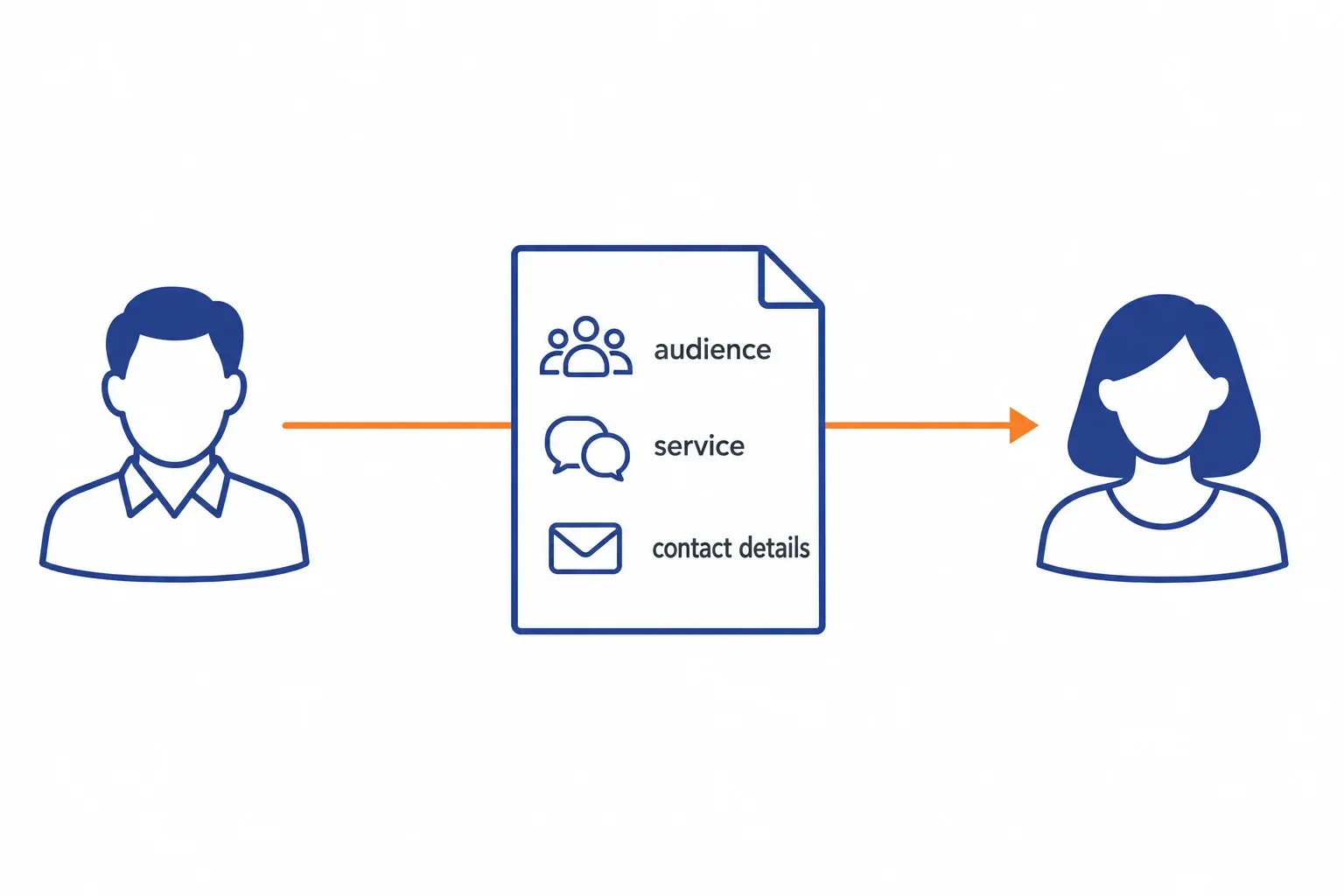
The page should identify your audience, explain the relevant service, and give a clear next step. A private introduction and permission to publish a client’s praise are separate matters; treat any proposed testimonial separately.
Give the client one accurate sentence and one relevant destination.
How do you build referral relationships with other professionals?
Professional referral partners need to understand your work, your boundaries, and when an introduction would help their client. Start with professionals whose services meet yours at a real client need. Build familiarity through useful conversations, then agree on a permission-based introduction process without promising referrals in return.
Strategic partners include CPAs, estate planning attorneys, insurance agents, real estate agents, and similar professionals serving individuals. Their concern is whether recommending your advisory or tax practice will serve their client well and reflect sound professional judgment.
If you have no established network, identify three relevant professionals through former colleagues, mutual connections, alumni networks, or professional associations. Review their actual services, then request a short conversation about overlapping client needs.
Hypothetical outreach: “We both work with people approaching retirement. I’d value understanding when your clients need help with [service], and explaining where our work begins and ends.”
Discuss client fit, scope, boundaries, potential conflicts, and any proposed compensation. For example, an estate planning attorney might prepare estate documents while an advisor addresses retirement income or a tax professional explains withdrawal tax consequences. Each stays within their expertise.
Before an introduction, ask both parties whether they welcome it. Obtain the individual’s permission, share only agreed information, and let that person choose the next step. Agree on confidentiality limits for reporting back. AICPA members generally need specific client consent to disclose confidential client information, unless an exception applies.
Maintain contact with a relevant update or useful resource. Reciprocal expectations can compromise the relationship’s purpose by pressuring either professional to recommend someone regardless of fit. Keep contact useful without setting referral quotas.
How can friends explain your work without feeling asked to sell?
Friends may know you are a financial advisor or tax professional without knowing whom you help. Explain your work in everyday language when it naturally comes up. Give them something accurate to share, but make clear that introductions are welcome, never expected or tracked.
Friends and former colleagues may recognize a relevant conversation yet lack the vocabulary to explain your services. Knowing you personally gives them a different kind of familiarity than understanding your practice. Some may welcome a way to help someone they know; leave that choice with them.
Hypothetical wording: “I work with people approaching retirement on [specific service]. If that ever comes up in conversation, this page explains it better than a job title.”
Replace the placeholder with an accurate service, such as planning retirement withdrawals or preparing individual tax returns. A specific service gives someone a situation to recognize. “Financial help” leaves them guessing about what you do.

The optional page should confirm whom you serve, what the service includes and excludes, and how to contact your practice.
You can add, “There’s no need to pass it along.” Make the explanation available, and leave any action to them.
How can family mention your practice without making it awkward?
Family can mention your practice without becoming part of its marketing. Give relatives a short, accurate description they can use if someone asks, and make introductions optional. Keep family conversations separate from prospecting, and never assume that being related gives permission to publish someone’s praise.
A relative can support your financial advisory or tax practice while remembering an earlier version of your work. Update that understanding respectfully.
Hypothetical wording: “The simplest way to explain my work is that I help people approaching retirement with [specific service]. You don’t need to find people for me, but that’s the description to use if someone asks.”
Ask relatives to avoid sharing private financial details or suggesting you can help everyone. Let an interested person contact the practice directly.
A voluntary personal mention differs from publishing a relative’s endorsement or paying for an introduction. For SEC-registered advisers, those activities can trigger marketing-rule requirements for testimonials and endorsements. Obtain permission and the applicable review before using family praise publicly or offering compensation.
Keep the family boundary explicit: clear wording, no obligation, and no follow-up pressure at family gatherings.
What rules apply to testimonials and paid referrals?
The rules turn on your registration, professional credentials, jurisdiction, and the arrangement, not simply whether the person referring is a client, professional contact, friend, or relative. Private introductions, published praise, and paid endorsements need separate treatment. Check the applicable rules before offering compensation or publishing someone else’s recommendation.
- Private introductions. A private, unpaid introduction is not automatically an advertisement. It also does not automatically give you permission to reuse a private message publicly.
- SEC-registered advisers. Under the Marketing Rule, a testimonial includes a current client’s statement about their experience or a solicitation or referral. An endorsement includes a nonclient’s approval, support, recommendation, solicitation, or referral. Covered uses can be permitted subject to applicable disclosures, oversight, written agreements, and disqualification provisions. Compensation includes noncash benefits. These conditions provide no blanket permission to publish praise or pay anyone.
- State-registered advisers. The SEC rule applies to advisers registered or required to register with the SEC. Apply your state’s advertising and solicitation requirements to your practice.
- FINRA member firms and associated persons. Rule 2210 sets testimonial requirements for covered communications; approval and supervision depend on communication category. Separately, Rule 2040 restricts payments to people whose compensation and activities require broker-dealer registration. Testimonial disclosures do not authorize those payments.
- Tax professionals. Circular 230 Section 10.30 prohibits covered practitioners’ false, misleading, coercive, or deceptive advertising and solicitation concerning IRS matters. Separately, Section 7216 restricts preparers’ use or disclosure of tax-return information, subject to exceptions and consent requirements. Neither provides universal permission for referral fees. CPAs must also account for applicable professional ethics and state-board rules.
Across all four sources, secure required permissions, your practice’s approval, and any required firm or compliance review before publication or payment.
What referral work fits into a busy month?
Set aside one short monthly block to check your message, maintain one relationship, and review how introductions are handled. You do not need to contact all four sources every month. Choose the action that removes the clearest obstacle, then stop before referral work displaces client commitments.
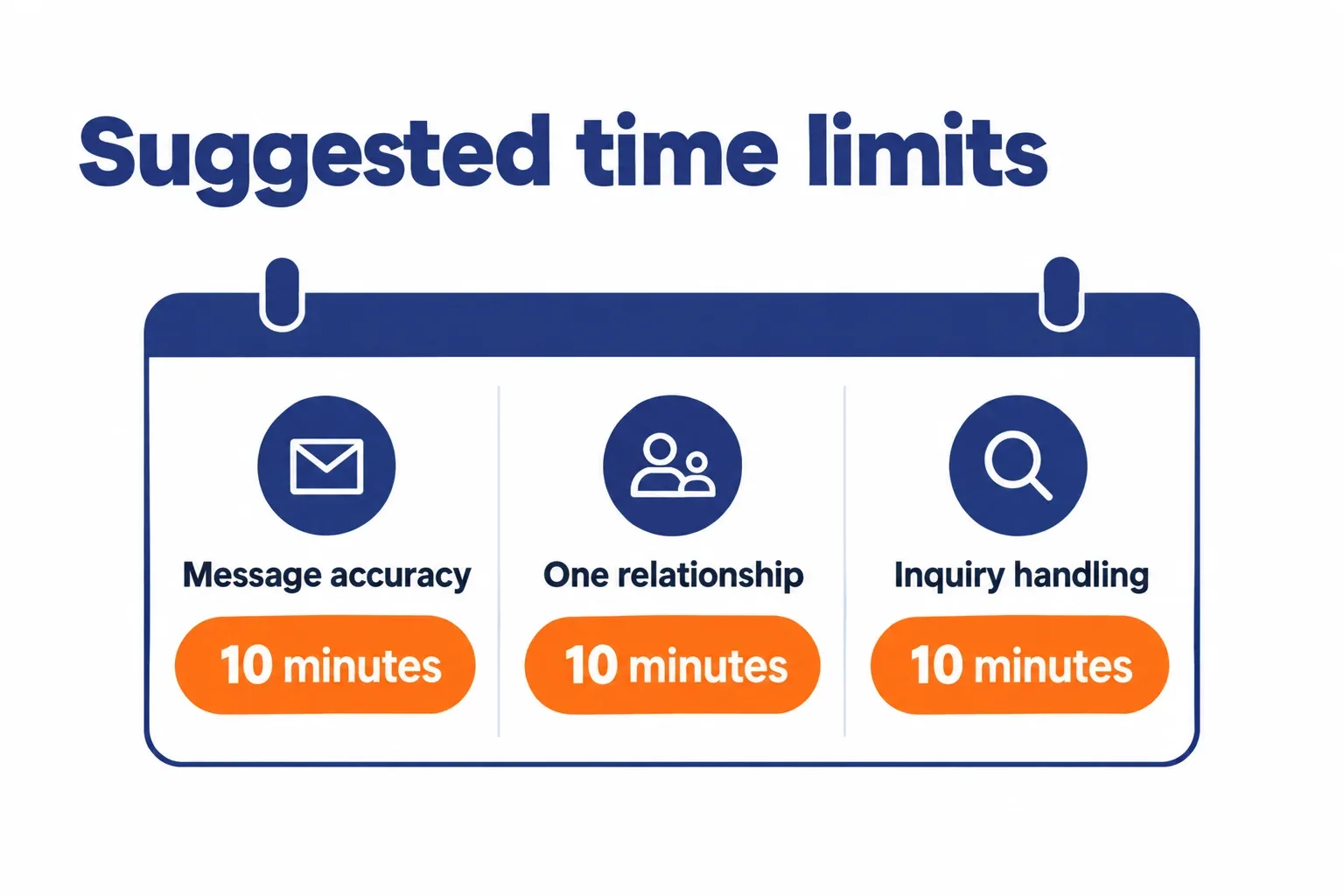
Try a 30-minute block for your advisory or tax practice. These are suggested working limits, not researched benchmarks or promises of results:
- Spend 10 minutes checking that your one-sentence description matches a relevant service page and professional profile. Each should identify whom you help and with what.
- Spend 10 minutes sending one useful, relationship-appropriate message. If your network is small, request an introduction through a mutual contact or professional association for one conversation about each other’s work.
- Spend 10 minutes reviewing inquiry handling. Can someone find the next step, and does your reply explain what happens next?
Record completed actions and inquiry sources people volunteer. Skip referral quotas and requests for friends’ or relatives’ contact lists.
Any marketing prepared on your behalf requires your approval before publication.
What else should you know before asking for introductions?
You can start small, ask without pressure, and build professional relationships without promising introductions in return. The important boundary is compensation: money, gifts, or other benefits can change which rules apply. Keep the first step simple and check the rules before adding an incentive.
How do I start if I have no established referral network?
Identify one relevant professional through an association, alumni connection, former colleague, or mutual contact. Begin by learning whom they serve and how they work.
Can I ask a client for an introduction?
A permission-based request may be appropriate within your firm's rules. Offer to let the client share your details, leaving the other person free to contact you.
Can I thank someone with a gift?
Check applicable rules before offering one. Under the SEC marketing rule, noncash benefits can count as compensation. FINRA's gift rule covers specified business-related gifts to people connected with other organizations, rather than every practice or recipient. Obtain any required firm approval first.
Do I need to refer business back?
You can build a useful relationship without a reciprocal promise. Recommend another professional when appropriate for the individual and consistent with your applicable duties.
What should people remember about your practice?
People should remember whom you help, what you help them address, and where someone can confirm that fit. Keep that message consistent across conversations and published material. You remain responsible for how your practice is represented, including approving anything prepared on your behalf.
FlowOps360 writes and publishes your marketing every month in your own voice, so clients, referral partners, friends, and family know whom you help. You approve every piece. Nothing goes out without your approval. See how it works for independent financial advisors.
Sources
- Survey Among Low Income Taxpayers: Final Report, Center for Taxpayer Rights, May 2024
- Code of Ethics, AICPA & CIMA
- Investment Adviser Marketing: A Small Entity Compliance Guide, U.S. Securities and Exchange Commission
- 17 CFR § 275.206(4)-1, Investment adviser marketing, eCFR
- Investment Adviser Marketing, U.S. Securities and Exchange Commission
- FINRA Rule 2210, Communications with the Public, FINRA
- FINRA Rule 2040, Payments to Unregistered Persons, FINRA
- FINRA Rule 3220, Influencing or Rewarding Employees of Others, FINRA
- Treasury Department Circular No. 230, Internal Revenue Service
- Section 7216 Information Center, Internal Revenue Service